The Frustration Of Gatekeeping Around Modern Cassette Culture
I’m listening to cassettes again.
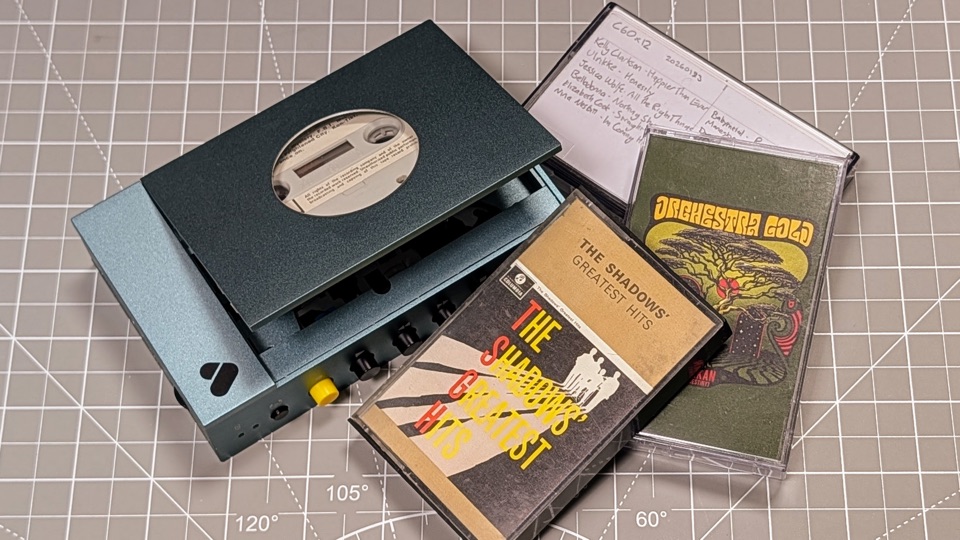
Let me rewind (sorry, not sorry). I’m working on a profile of We Are Rewind, a French company that “decided to bring the cassette player back.” As part of the profile, I’ve also been listening to music on their WE-001 cassette player and recorder (that’s it pictured up top) while exploring the wider world of cassette culture today.
I have thoughts.
Starting Out Or Returning To Tape
Looking around the community’s suburbs, the biggest issue in modern cassette culture is the gatekeeping that surrounds the hardware. Within a few minutes of searching on various forums, subreddits, and Discord channels, it was clear what the loudest voices want everyone to be using in 2026: anything but the new hardware on sale. ‘Find an old Walkman, pick up a home cassette deck, but whatever you do, don’t buy these new players.’
Their advice is to head out to the auction sites, sift through the various “not working” and “parts only” offers, find a player that’s in relatively good condition, crack open these thirty- to forty-year-old machines, check for broken capacitors, replace the elastic drive belts, calibrate the drive speeds, sort out the playback heads azimuths… That’s asking a lot for people who are thinking about cassette tapes for whatever reason, and that could be enough to keep many from returning.
Modern Cassette Players Are All Built On One Design
What’s wrong with just going out and buying one of the new cassette players on the market, such as the We Are Rewind WE-001 or the Fiio CP13. The arguments against the new machines are pretty universal. They have weak audio reproduction, use a cheap Chinese tape transport mechanism, are terrible at recording, and are dead ends for the technology.
I’d happily agree with the facts of the first three. My second Walkman, a Sony WM-BF40 from 1998, has a frequency range of 40-15000 Hz, compared to We Are Rewind’s 30-12500 Hz. There is noticeable fuzz recorded while I was dubbing a mix on the WE-001. At the same time, once I start listening to my first mixtape in twenty years, the fuzz faded into the background of my mind. As for my old tapes from the eighties, they sound just as I remember them.
One of the saddest parts in all this is actually the biggest influence on what modern cassette players can offer. There’s only one design of transport mechanism (the moving guts of a cassette player) available, namely the Chinese-manufactured clones of the Tanashin mechanism. The IP, skills and knowledge for alternatives are no longer available; the recipes have been lost. Different materials and higher tolerances can be used in the Tanashin design, but at heart, every new cassette player and recorder has the same foundation.
I suspect that’s why enthusiasts think this approach is a dead end for cassettes.
Make Not Break An Audience
There has always been a group of audiophiles who demand the highest audio quality possible, no matter the decade – although they are not the only voices today, they are the loudest. There are far more options for lossless audio and perfect reproduction in 2026; cassettes don’t need to be among them.
I don’t think cassettes were ever about getting precision. Not in the eighties, and not now. Cassettes are about emotion, feeling and character. Standing here in 2026, I’ll add in the physicality and ownership of music. Bandcamp has a ‘cassette’ tab for a reason, and I’m already exploring it. Probably worth noting that these tapes also let you download lossless digital copies. And the performers are going to get a lot more income from one play on a purchased cassette than one play on Spotify.
So go out and impulse-buy one of the modern cassette players. Dive into eBay and pick up some classics. Find your favourite artists and support them not just with a purchased download, but buy the album on cassette.
If purists want their quest for a new mechanism to be designed and sold, the market needs to be larger than it is today. The way to grow that market is not to send anyone interested towards an electrical repair course, it’s to bring the emotion of music back into their life as quickly and as easily as possible..
We Are Rewind provided a WE-001 during the interview process. Thirteen-year-old me bought the Sony WM-BF40 Walkman with a hefty discount because it was a display model.
Photo: We Are Rewind’s WE-001 Cassette Player, The Shadows Greatest Hits, Orchestral Gold’s Dakkan, and a C60 Mixtape (Ewan Spence).


