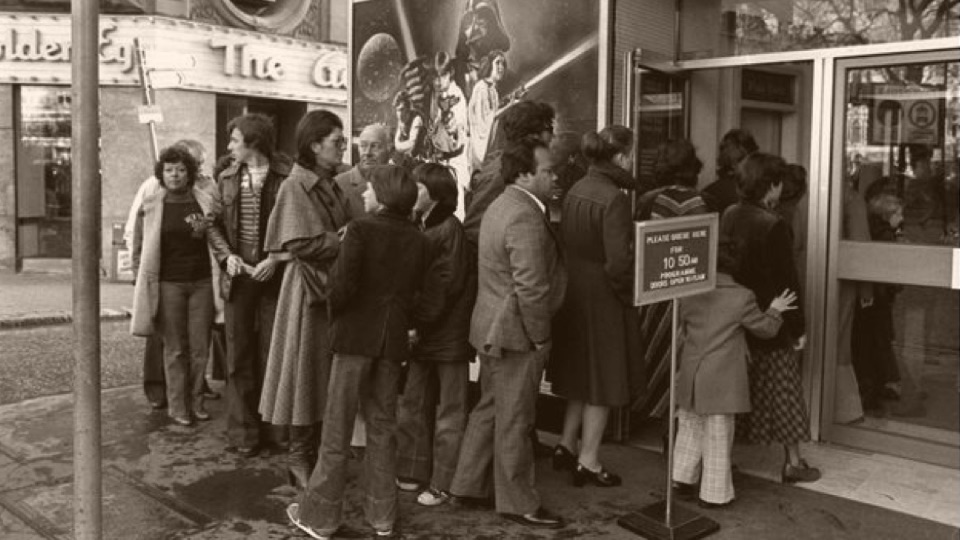
Star Wars Needs To Be Preserved From Authorial Intent
The BFI finally screened its first-generation Star Wars print earlier this week. Trapped in a sealed tin can in the bottom of a dusty old filing cabinet sealed by Disney-emblazoned red tape snce 1977, the fanaticism of George Lucas to continually upgrade everything in the film and culturally delete the previous versions has meant that one of the most creative films in history hasn’t been seen for nearly fifty years.
I do think that The Hollywood Reporter has missed the sarcastic tone of the British film critics who attended the screening; Robbie Collins’ line of “I felt like I was watching a completely different film, [a] joyously craggy, grubby, stolidly carpentered spectacle” reads differently in earnest American than the original British tone.
Star Wars is a science fiction film, with a limited budget, that was filmed and released in 1977. It’s meant to look like this. If you want over-processed iterative film manufacturing with years of corporate interference corrupting a significant cultural object, go and watch Star Wars: Episode IV – A New Hope.
I don’t have a problem with George Lucas continuing to work on his film; authorial intent should always be considered. I do have a problem with him denying the original work, a work that changed the art of filmmaking forever.
It deserves to be preserved, studied, and shared. And with the fiftieth anniversary coming up, I would love to see Disney strike some prints from the BFI’s preserved print and offer a limited release of a film that millions of people have never had the opportunity to watch before … Star Wars.
Photo: UK audience queueing to see Star Wars in December 1977 (CC Wikimedia).


